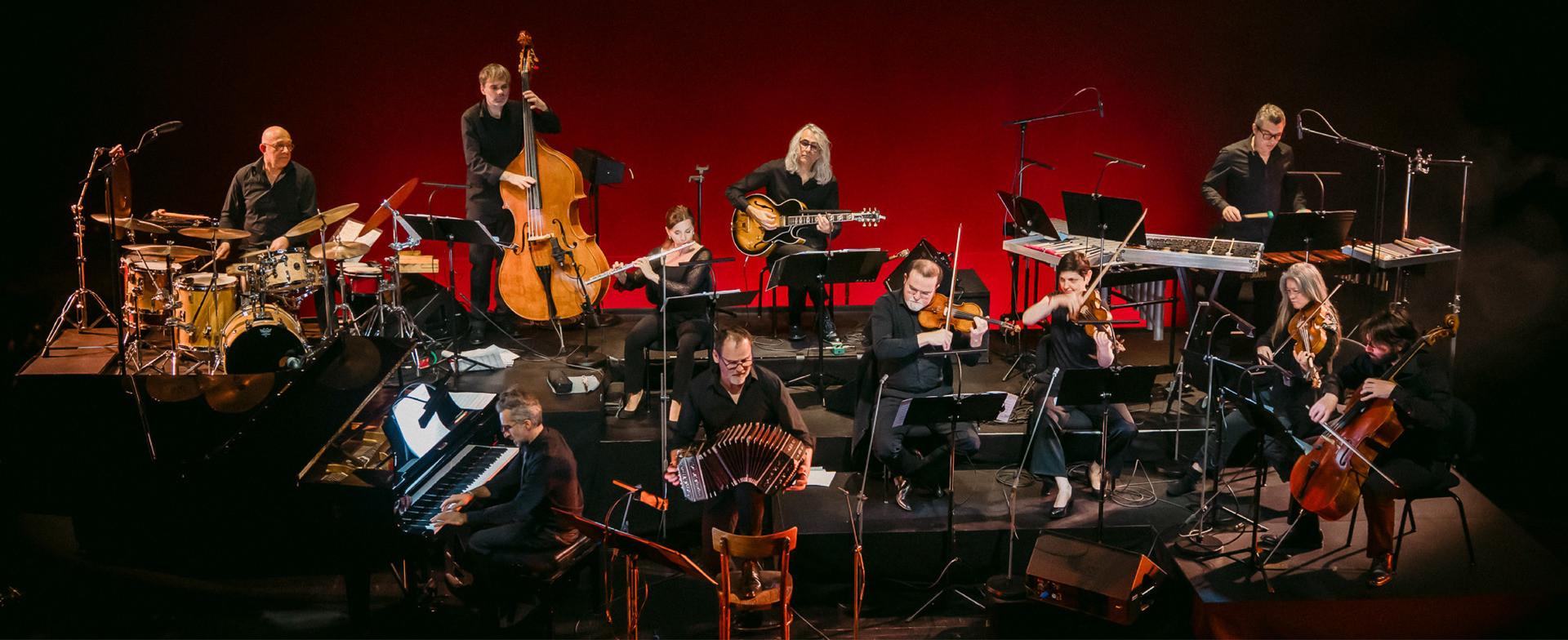

María de Buenos Aires
María lives and dies, sings and dances, and gives birth to the destiny of a city, Buenos Aires, as well as a musical genre: Piazzolla’s Nuevo tango. Powerful and dreamlike, María de Buenos Aires draws us into the intoxicating magic of Buenos Aires by night.
Like a master alchemist, Ástor Piazzolla melds tango, jazz and classical music in his musical crucible. From an urban legend—that of a young factory worker who became a tango singer, then a prostitute, and whose grave is said to have given rise to Buenos Aires—springs a visceral, sensual cycle of life and death, as primal and pulsating as the tango itself. Dead or alive, daughter or mother, María haunts the city, her presence lingering in every corner. Sung, spoken and danced, her story unfolds in a world that is at once surreal and mystical, embodied and feverishly alive.
The work defies easy categorisation, much like its performers—first and foremost Sol García, who embodies María. In Amélie Parias’s staging, and under the artistic direction of William Sabatier, whose bandoneon breathes life into an orchestra of rare, intoxicating colours, the music unfolds across a feverish sequence of eighteen tableaux.
Libretto Horacio Ferrer
Artistic director William Sabatier
Spatial staging Amélie Parias
Costumes Benjamin Broillet
Copyist Aaron Medina
María Sol García
Gorrión Diego Valentín Flores
Duende Sebastián Rossi
Bandoneon William Sabatier
Piano Roger Hélou
Guitars Adrian Fioramonti
Flute Jocelyn Aubrun
Double bass Romain Lecuyer
Drums and percussion Richard Héry
Percussion-keyboard Attilio Terlizzi
Quatuor Terpsycordes
First violin Girolamo Bottiglieri
Second violin Raya Raytcheva
Viola Marion Rolland
Cello Florestan Darbellay
Photo © Giulia Charbit
You might also like
Ariadne auf Naxos
Richard Strauss
Riccardo Primo
Georg Friedrich Haendel
The Carmen Case
Diana Soh & Georges Bizet